
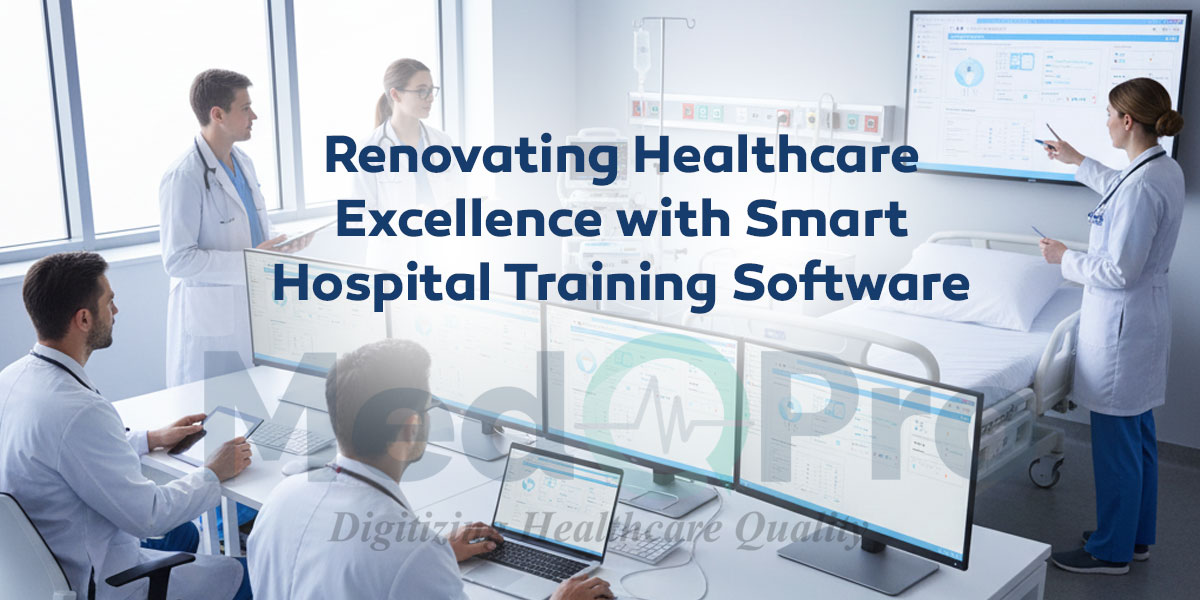
Nowadays continuous assessment is the key word for employee competence, considering that medical standards, government regulations and new technology are continuously changing. Good training management is a requirement in hospitals to ensure that their medical staff comply with the laws and latest best practices. The majority of modern hospital training software today have a centralized platform that will aid in the teaching, tracking of skill developments and regulatory compliance.
It’s the perfect solution to such issues. More often than not, hospitals have more complex issues when it comes to the training of their employees. Thus, putting the money into a good training system is more of strategic argument than practical cost.
The Hospital Staff Training Over Time
Mostly training hospitals’ staff were just in classrooms using printed materials with slow and time-consuming hand-written records that did not give any clear view to managers on how well training was going. It became difficult to plan for multiple shifts in addition to tracking each student’s growth and submitting required reports to compliance and accrediting bodies. A lot of time spent on activity meant that delays in patient care occurred due to training gaps, documentation errors, and useless, time-consuming tasks. The broader trend in health care is moving more toward digital. It has brought changes in how professional paperwork is being done, in involving patients, and in operation management. With electronic health records, telemedicine platforms, and data analytics already being used by hospitals, it would make sense to use them to train their new employees. The smart hospital training software and digital training tools allow users to learn when it is most convenient for them, regardless of their schedules, preferred learning styles, or previous level of expertise. In addition, it collects real-time data, allowing companies to strategically plan staffs.
Today’s healthcare environment demands that continually learning be part of the working environment wherein people could keep up with the fast-paced and changing clinical practices. Change in treatment plans, medicines, medical devices, and rules would require continuous education that cannot be satisfied through the usual once-a-year trainings. Hospital training software makes this possible through the dispatch of new content on time, allowing employees to learn small bits during breaks, and setting automatic reminders to ensure deadlines are met in training completion.
“MedQpro empowers hospitals with smart training software to ensure staff competence, regulatory compliance, and healthcare excellence”
Managing Crucial Issues within Health Care Training Education
A considerable amount of issues plagues the hospital training leaders and delays or renders their functions ineffective. When trying to schedule training sessions across several offices, palaces, and shifts while guaranteeing the best possible patient care, there will always be problems juggling schedules. Hand tracking data-related monitoring makes records inaccurate and compliance more difficult. The long litany of issues complicates management of scarce resources and field time. Such practices also increase the chance that noncompliance may lead to civil or criminal liability or fines.
The issue of content management is also serious, especially in larger healthcare systems that would have multiple sites, with distinct training needs for the services they offer, laws governing them, and the specialization of their respective departments. The absence of centralized systems makes it difficult to direct the changes to non-centralized places and keeps training materials up-to-date. Security of versions is also a challenge. Staff waste time on old content and may acquire bad habits of care that put patients at risk or violate rules set by regulators.
Strategic Benefits of Hospital Training Tool Integration
You can begin measuring performance improvements such as efficiency, compliance, or workforce development by centralizing, standardized hospital training management. For example, manual operation jobs typically absorb a lot of administrative time with many processes, such as tracking progress, sending reminders through e-mail, and report creation, now becoming automated. In this manner, training departments became more productive and could take on bigger teams without needing to expand the scope of hiring; extra time could instead be utilized for higher-priority activities like interpreting lesson plans, determining students’ skill gulf, and comparing programs with best practices.
With searchable databases of training record that users can instantly access during tests and letting them know when they need to renew their certifications, compliance has been an easy ride. It is simple for administrators to generate detailed reports that show achievement rates, competencies checks, and compliance status for the entire company or a selected area. There are many instances when it is necessary to demonstrate that adequate training has occurred for the purpose of ensuring good liability insurance, licensing agency compliance, or adherence to rules.
Healthcare Companies Must Consider when Putting
So, it involves proper planning for an effective training platform, such as the technology being put into place, managing the change, and all parties involved. Most of the technical considerations include interfacing with other HR systems, single sign-on for all, permitting access for employees without their own desks through their phones, and allowing scalability of the system along with the business. On-premises or cloud-dependent decisions are what healthcare organizations should consider with their IT infrastructure, security needs, and budgets. Explore the NABH Management Software for your hospital to streamline accreditation compliance and quality management at MedQpro.
“With MedQpro, hospitals can revolutionize staff training, track skills seamlessly, and stay compliant with evolving medical standards.”
Most people tend to forget that change is part of training with new tools. Hard to use or complicated digital devices may not be embraced by users who previously learned things the old-fashioned way. Successful implementation meets the needs of the user groups through intensive training, continuous support, and stakeholder communication based on benefits, yet with attention to the objections. Bringing in clinical leaders and department heads tends to approach the change as a push from the bottom up rather than just top-down implementation.
Conclusion: Making Training Better for the Long Term
There is much more to consider when establishing a hospital training management than just the initial setting up of the platform. Continuous change is also part of developing the long-term training program. The content must be updated regularly for the better hospital QMS software solutions. There must be ongoing reviews of the content to ensure that it remains current with evolving laws, business policies, and standards in the industry. Feedback mechanisms for student feedback, instructor commentary, and test results allow for small modifications for an engaging environment when learning and facilitate the recall of material learned. The governance frameworks identified by organizations should have clear designations of who will be responsible for what and how tasks like creating or ensuring quality material delivery and program evaluation will be carried out. Get in touch with the MedQpro for smart Hospital Training Software solutions in India.