
Managing a medical centre means dealing with endless stacks of paperwork. Getting ready for a big inspection usually involves hunting down lost files, begging people for missing signatures, and stressing over old incident reports. It burns up hours that should be spent on the actual wards.
When you switch to a hospital quality management software, that entire headache goes away. You stop wasting time digging through metal filing cabinets. Instead, your staff gets to focus purely on patient care while the computer handles the heavy administrative lifting.
Table of Contents
- Why Are Paper Records So Frustrating During Audits?
- How Does Digital Tracking Protect Your Patients?
- What Makes A System Actually Easy To Use?
- Why Are Paper Records So Frustrating During Audits?
Why Are Paper Records So Frustrating During Audits?
Preparing for big JCI or NABH inspections using physical folders is a tiring chore. Quality managers spend weeks walking between different floors, trying to collect forms from busy doctors and nurses. If an inspector randomly asks to see an infection report from six months ago, finding that single piece of paper takes way too long and makes the facility look disorganised.
Using digital accreditation process software fixes this mess entirely. Every single form, policy, and daily checklist lives on a secure cloud server instead of a crowded desk. These JCI accreditation tools mean that when the auditor walks in, your team simply opens a screen to show them exactly what they need in seconds without breaking a sweat.
How Does Digital Tracking Protect Your Patients?
Meeting strict patient safety compliance rules is the whole point of running a medical facility. When you rely on a digital tracking setup, your team catches physical hazards and medical errors the exact moment they happen. Here is how the system protects the people staying in your wards:
- Instant Hazard Reporting: A nurse can log a slipped rug or a broken bed rail right from their phone without leaving the noisy hallway. This quick alert means managers get notified immediately before someone actually falls and gets severely hurt. They fix the physical danger right on the spot instead of waiting for a paper form to cross their desk.
- Detecting Infection Patterns: The system logs hospital-acquired infections and alerts to sudden surges in specific wings of the building. Quality teams analyse these simple trend graphs and decide whether a particular area needs a much higher level of cleaning. Detecting these patterns early avoids huge outbreaks and saves highly vulnerable patients from further harm.
- Emergency Drills Management: Required emergency drills are mandatory, and the software records who was present for the required fire or code blue drills. It pinpoints precisely which staff members missed the training so managers can quickly arrange for them to complete the missed training. Knowing that every single worker understands the emergency plan prevents extreme panic during a real hospital crisis.
- Standardising Medical Files: Doctors often have very different ways of taking notes, which causes heavy confusion when shifts change over. The system runs constant checks to make sure every single patient file has the correct signatures and required medication details. Clear, completely readable records mean the next nurse on duty knows exactly what to do without making a critical mistake.
What Makes A System Actually Easy To Use?
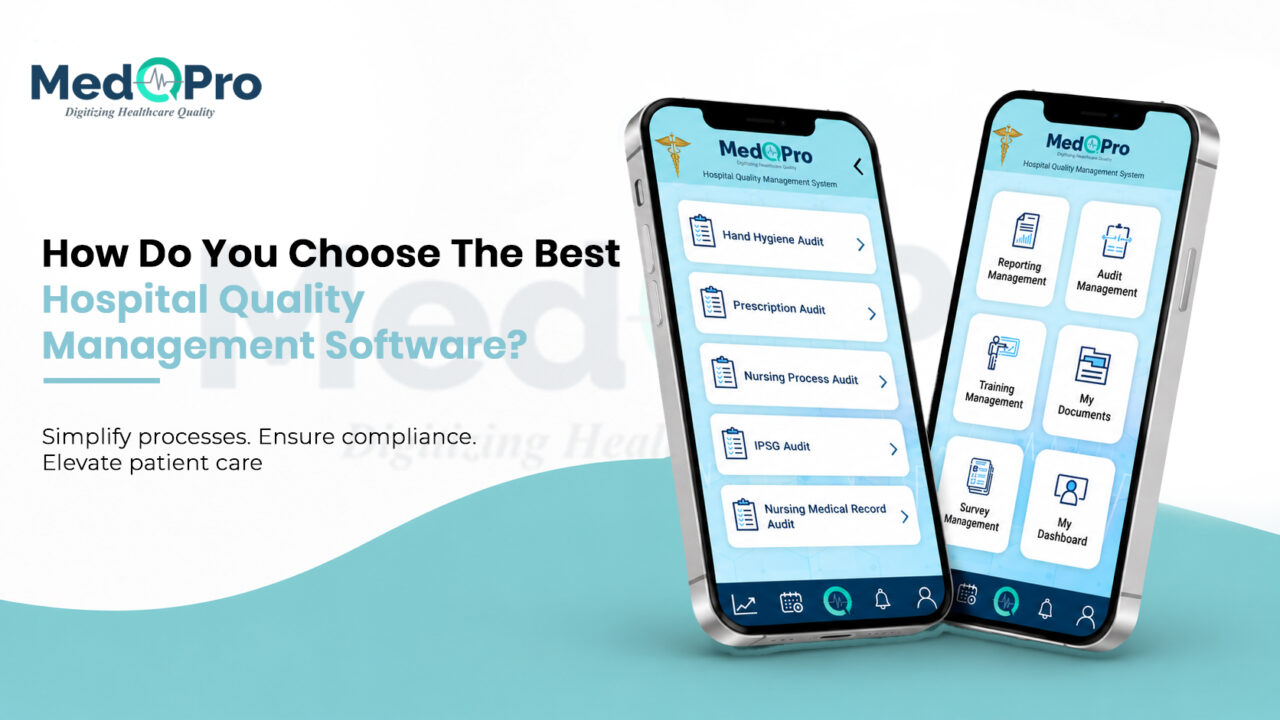
You cannot force busy doctors to learn a complicated computer program. The best QMS software for hospitals has to feel completely natural. It needs a solid mobile app so staff can take pictures of issues, record quick voice notes, and finish their checklists while they are on the move.
It also needs to match your local rules automatically. Finding a NABH-compliant healthcare software means the legal standards are already built directly into the tool. Your staff simply follows the clear prompts on their screen to stay perfectly compliant without having to memorise a rulebook.
Stop Chasing Missing Paperwork
Running a busy medical facility is hard enough without fighting against messy filing cabinets. A digital system keeps your entire building organised, safe, and ready for any surprise inspection. You get to ditch the paper trails, cut out the double work, and actually see what is happening on your floors in real time.
Ready to make your next audit completely stress-free? Visit or contact MedqPro to see how our platform organises your daily hospital routines.
Frequently Asked Questions
Can my staff use this on their smartphones?
Yes. The platform includes a dedicated mobile app. Nurses and doctors can log issues, take photos, and finish their checklists right from their phones without having to track down a free computer desk.
Will this help us pass our NABH inspections?
Absolutely. The system was built by industry experts to include exact NABH and JCI rules. It guides your team to do things the right way every single day, so you are always ready for an auditor.
Does this replace our current billing system?
No. A healthcare QMS software handles your safety, audits, and quality checks, but it connects directly to your existing hospital systems to share the numbers easily without double typing.